Home / Aviation wing
Both sets of wings, to commercial.
Fixed-wing and rotor, flown to commercial certification on a working flight line — then the Airframe & Powerplant certificate that lets you sign off on the aircraft you fly.
Apply to the aviation wing
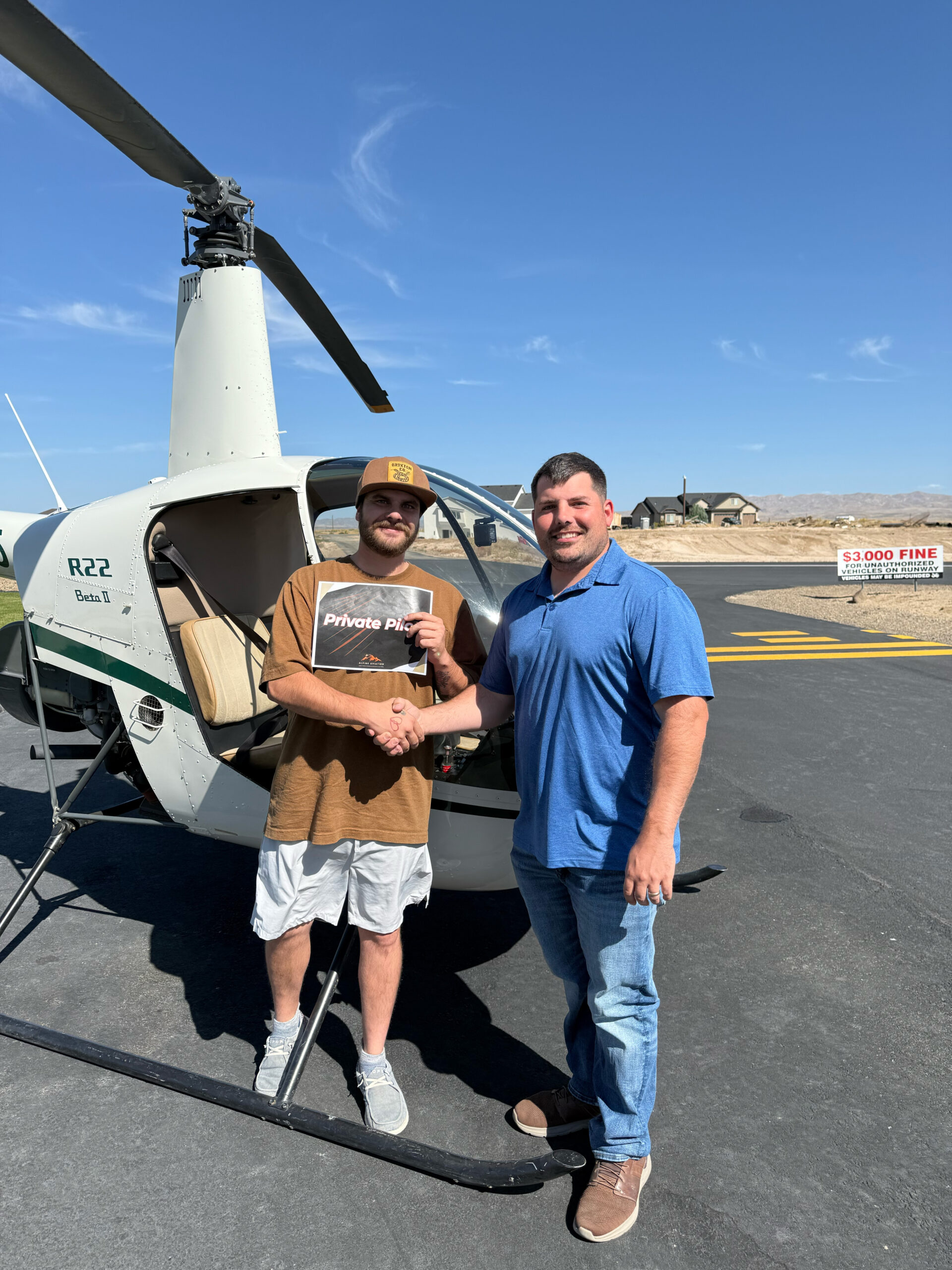
Fixed-wing first. Rotor second. Both to the same standard.
You start in an airplane because the fundamentals transfer: airspace, weather, radio work, decision-making under load. Private in Year 1, commercial and instrument in Year 2. Only then does the program hand you a collective.
Helicopter training opens in Year 3 and runs to a commercial rotor certificate with an instrument rating by Year 4. Students who want to teach add the fixed-wing Flight Instructor certificate and Fundamentals of Instructing in Year 3 — the fastest route to logging paid hours before you have even graduated.
Eleven aviation certifications
Every credential below is scheduled, not aspirational — each one has a target week inside the two-hundred-week program.
| Certification | Year | Target week |
|---|---|---|
| Private Pilot License — Airplane | Year 1 | W36 |
| Commercial Pilot License — Airplane | Year 2 | W62 |
| Multi-Engine Rating — Airplane | Year 2 | W64 |
| Instrument Rating — Airplane | Year 2 | W71 |
| Private Pilot License — Helicopter | Year 3 | W108 |
| A&P Mechanic Certificate | Year 3 | W112 |
| Commercial Pilot License — Helicopter | Year 3 | W116 |
| Fundamentals of Instructing | Year 3 | W117 |
| Flight Instructor — Airplane | Year 3 | W119 |
| Instrument Rating — Helicopter | Year 4 | W124 |
| Part 107 Remote Pilot | Year 4 | W129 |
Pilot training is delivered under FAA Part 141 and maintenance training under Part 147. Both certifications are in application; target weeks assume approval on the published compliance schedule.
Hours in the logbook by graduation
Certificates are the paperwork. Hours are what an employer actually reads.
Planned minimums per student across the five-year program. Individual totals vary with weather, medical timing and elective choices.
The A&P is the multiplier.
A pilot who holds an Airframe & Powerplant certificate is a different economic animal. You can inspect, repair and return to service the aircraft you fly — which is the difference between renting a career and owning one.
The Part 147 sequence runs General, Airframe, then Powerplant, with practical and oral exams in Year 3. It is taught in a working maintenance hangar with inspection pits and an engine run-up area, not a classroom mock-up.
Where the A&P leads → aviation service divisions
The fleet you train on
Planned campus fleet for Years 3–4 — enough airframes that scheduling is not the thing that slows your certification down.
- 6Single-engine pistonCessna 172 / Piper Arrow class — primary training and cross-country
- 4Light helicopterRobinson R44 class — rotorcraft training and ratings
- 3FAA-approved simulatorsInstrument training and emergency procedures
- 2Multi-engine pistonPiper Seneca / Beechcraft Baron class — multi-engine rating
- 1Turbine helicopterRobinson R66 / Bell 206 class — advanced and instrument rotor
What sits on the airfield
- 10,000 sq ft climate-controlled main hangar
- 8,000 sq ft maintenance hangar with inspection pits
- Engine run-up area
- Flight operations base with weather briefing and dispatch
- Avionics lab — radio, GPS, autopilot bench
- Composite repair shop with cure oven
- Aircraft wash bay with water reclamation
- Fuel farm — 100LL and mogas
Facility programme for the first campus. Buildout runs months 3–8 of the launch timeline; see About for where the institute currently stands.
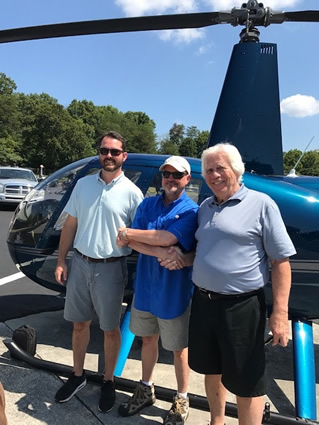
Taught by people who fly for a living.
The aviation wing is built on Alpine Aviation, a working flight school and commercial operator. Flight instructors hold current CFI or CFII certificates; maintenance instructors hold A&P certificates with Inspection Authorization.
Dual flight instruction runs at 2:1. Solo work is supervised 1:1. There is no version of this program where you learn to fly from the back of a lecture hall.
See the other side of campus →The flight line does not care where you went to high school.
Apply to Oasis Tech